


Festive clothing feels more enjoyable when it combines visual appeal with freedom of movement. A sharara suit for women offers a distinctive silhouette through its wide-legged trousers, flowing layers, and traditional details, making it suitable for weddings, festive gatherings, family functions, and evening celebrations.
Unlike conventional straight-cut suits, shararas create movement with every step while still retaining the familiar charm of ethnic dressing. Fabric, color, embroidery, and dupatta styling can change the character of the outfit considerably, allowing the same silhouette to feel traditional for one occasion and more contemporary for another.
Understanding the Sharara Silhouette
The wide, flared trousers are the defining feature of a sharara. Some designs begin their flare around the knee, while others use layered construction throughout the lower half. This difference affects how the outfit moves and how much volume it creates while walking.
The kurta needs to balance that volume carefully. Shorter kurtas can draw attention towards the trousers, whereas longer styles create a more continuous appearance. Choosing proportions according to personal comfort and body shape helps prevent the outfit from looking unnecessarily bulky or difficult to manage.
Choosing Fabrics That Move Well
Fabric has a direct effect on the way a sharara falls and moves. Chiffon and georgette create softer movement, while silk and brocade offer more structure. Lighter materials can be particularly comfortable when the celebration involves dancing, walking, or spending several hours outdoors.
When comparing fabrics, consider:
- The weather and season of the event
- How long the outfit will be worn
- The weight of embroidery and embellishment
- How freely the trousers need to move
These practical factors can make the difference between an outfit that simply looks attractive and one that remains comfortable throughout the celebration.
Balancing Embroidery and Decorative Work
Sharara suits can range from lightly detailed designs to heavily embroidered festive ensembles. Threadwork, zari, sequins, mirror work, and decorative borders can all be used to add character, but the amount of embellishment should suit the occasion.
A detailed border can emphasize the movement of the trousers, while matching elements on the kurta or dupatta can connect the entire outfit. If the lower half already contains considerable decoration, keeping other areas slightly simpler can prevent the ensemble from looking too busy.
Adding Warmth with Orange
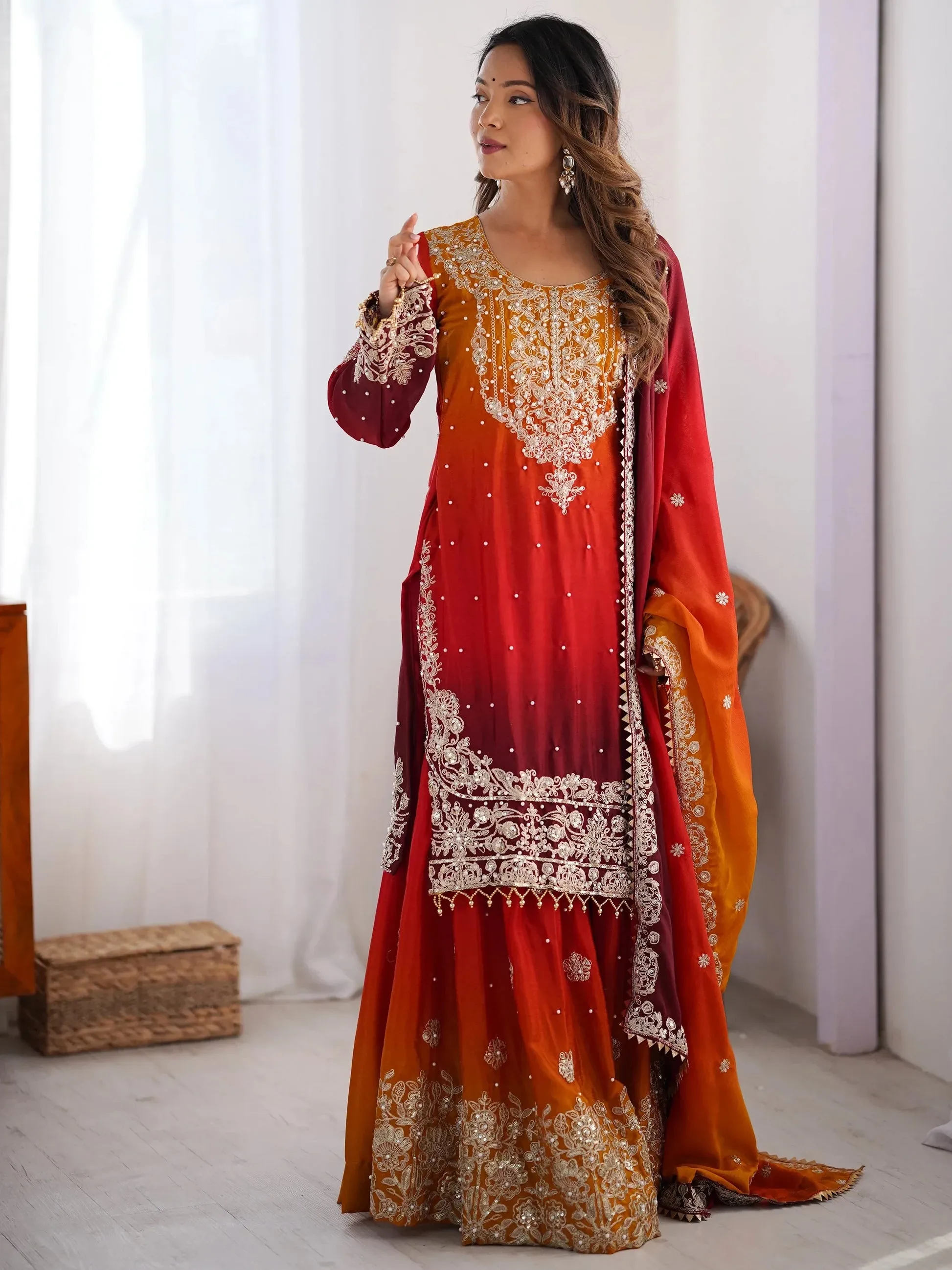
Color can change the entire personality of a sharara, and an Orange Sharara Suit brings a naturally bright and energetic quality to festive dressing. The warm shade can work particularly well for daytime celebrations, family functions, and traditional gatherings where cheerful colors feel appropriate.
Orange can also be styled in several ways depending on the depth of the shade and the accompanying accessories. Gold details can create a traditional appearance, while contrasting jewelry or a differently coloured dupatta can make the outfit feel more contemporary without taking away from its festive character.
Styling the Dupatta Thoughtfully
A dupatta can influence both the appearance and practicality of a sharara suit. A traditional shoulder drape creates a familiar ethnic look, while a simpler one-sided arrangement can give the outfit a cleaner contemporary feel. The fabric should also be considered because heavier dupattas may restrict movement.
For celebrations involving dancing or extended activity, keeping the dupatta secure can make the outfit easier to manage. Carefully placed folds or discreet pins can prevent constant adjustments while still allowing the drape to remain an important part of the overall styling.
Choosing Jewelry and Footwear
Jewelry should complement the level of detail already present in the outfit. Statement earrings may be enough when the sharara features heavy embroidery, while a simpler design can accommodate bangles, necklaces, or other traditional pieces without appearing excessive.
Footwear also affects the overall proportion. Heels can work well with longer trousers, while embellished flats may be more practical for extended celebrations. Whatever the choice, the footwear should allow comfortable walking and standing while maintaining the balance of the complete silhouette.
Making the Outfit More Versatile
A thoughtfully selected sharara does not need to be reserved for one particular celebration. Changing the dupatta, jewelry, hairstyle, or footwear can create a noticeably different appearance while keeping the main outfit unchanged. This makes versatile designs useful for women who attend several festive events during the year.
Choosing wearable colors and balanced embroidery can further extend the outfit’s usefulness. Rather than relying entirely on heavy decoration, good tailoring and suitable fabric can give the ensemble enough character to work across different celebrations without feeling repetitive.
Conclusion
Sharara suits bring a distinctive sense of movement to ethnic dressing while retaining the traditional elements associated with festive fashion. Fabric, color, embroidery, and styling all influence how the silhouette performs during an occasion. By giving equal attention to comfort and appearance, women can choose a sharara that feels expressive, practical, and appropriate for celebrations ranging from intimate family gatherings to larger festive events.