

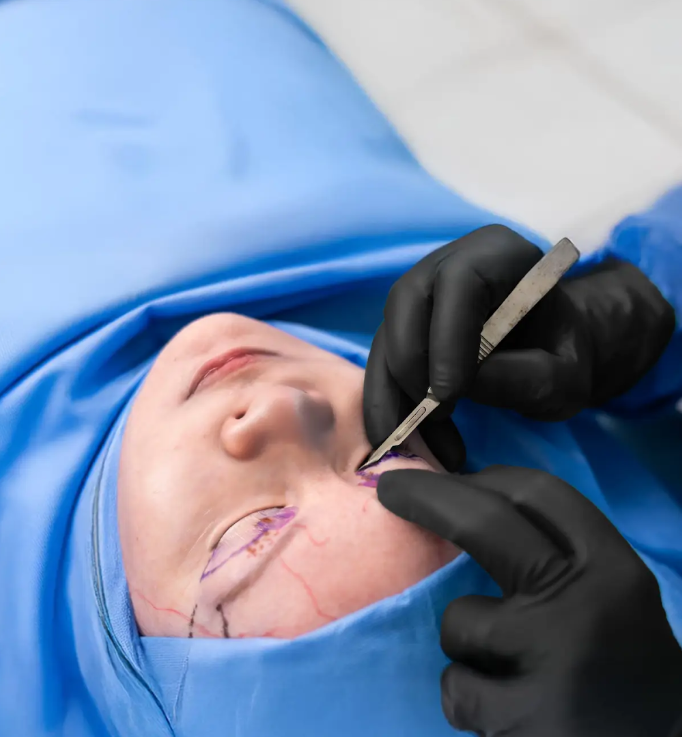
If your eyes constantly look tired—even after a full night’s sleep—you might assume it’s due to sagging skin and start considering eyelid surgery. While that’s often true, it’s not always the full story. In many cases, the real issue lies deeper: a weakened eyelid muscle, a condition known as ptosis.
Understanding the difference between blepharoplasty and ptosis repair is essential, especially for patients in Toronto seeking accurate diagnosis and natural-looking results from specialists like EyeFACE Institute.
What Is Blepharoplasty?
Blepharoplasty is a cosmetic procedure designed to improve the appearance of the eyelids by removing or repositioning:
- Excess skin
- Fat deposits (puffiness)
- Loose muscle
It’s ideal for patients who have:
- Droopy upper eyelid skin
- Under-eye bags
- A “heavy” or aged appearance
Blepharoplasty works on the surface level, addressing structural changes caused by aging, genetics, or environmental factors.
What Is Ptosis?
Ptosis (pronounced “toe-sis”) is a medical condition where the levator muscle—the muscle responsible for lifting your upper eyelid—becomes weak or stretched.
This leads to:
- A visibly low eyelid position
- Eyes that appear sleepy or half-closed
- Possible vision obstruction in more severe cases
Unlike blepharoplasty, ptosis is not just about skin—it’s a functional issue involving muscle strength and eyelid mechanics.
Ptosis Repair: Fixing the Root Cause
Ptosis repair is a specialized surgical procedure that tightens or repositions the levator muscle to lift the eyelid to a more natural height.
This procedure:
- Restores proper eyelid function
- Improves symmetry between both eyes
- Opens up the eye for a more alert, youthful look
At EyeFACE Institute, surgeons are trained in oculoplastic techniques, allowing them to precisely address both cosmetic and functional concerns.
Why “Tired Eyes” Are Often Misdiagnosed
Many patients assume droopy eyelids mean excess skin—but that’s not always accurate. In reality:
- Skin excess (dermatochalasis) can weigh down the eyelid
- Muscle weakness (ptosis) can prevent the eyelid from lifting properly
- Some patients have both conditions simultaneously
Treating only the skin when the muscle is the problem can lead to:
- Unsatisfactory results
- Persistent “tired” appearance
- Eyelid asymmetry
That’s why a proper evaluation is critical before choosing the right procedure.
Key Differences: Blepharoplasty vs. Ptosis Repair
| Feature | Blepharoplasty | Ptosis Repair |
| Primary Focus | Excess skin & fat | Eyelid muscle function |
| Purpose | Cosmetic enhancement | Functional + cosmetic |
| Target Area | Outer eyelid layers | Levator muscle |
| Result | Smoother, less heavy lids | Higher, more open eyelids |
Can You Combine Both Procedures?
Yes—and in many cases, you should.
Patients with both excess skin and muscle weakness benefit most from a combined approach, which may include:
- Removing extra skin (blepharoplasty)
- Tightening the muscle (ptosis repair)
This ensures:
- Balanced eyelid height
- Natural contours
- Long-lasting results
Specialists at EyeFACE Institute often customize treatment plans to address both issues in a single procedure.
Signs You Might Need Ptosis Repair (Not Just Blepharoplasty)
You may have ptosis if you notice:
- One eyelid sits lower than the other
- You constantly raise your eyebrows to see better
- Your eyes look tired even without excess skin
- Your upper eyelid partially covers your pupil
If any of these sound familiar, a muscle-based correction may be necessary.
Why Specialist Evaluation Matters
The eye area is one of the most delicate and complex parts of the face. A precise diagnosis requires:
- Detailed anatomical assessment
- Understanding of eyelid function
- Experience in both cosmetic and reconstructive techniques
Choosing a clinic like EyeFACE Institute ensures that your treatment plan is based on what your eyes truly need—not just what appears on the surface.
Recovery and Results
Recovery timelines for both procedures are similar:
- Swelling and bruising for 1–2 weeks
- Gradual improvement over several weeks
- Final results visible within a few months
Patients who undergo the correct procedure (or combination) often notice:
- Brighter, more awake eyes
- Improved symmetry
- Enhanced confidence
Final Thoughts
If your eyes look tired, the solution isn’t always as simple as removing excess skin. Sometimes, the real issue lies in the muscle that lifts your eyelid.
Understanding the difference between blepharoplasty and ptosis repair can help you make an informed decision—and avoid disappointing results. For Toronto patients, consulting with experienced specialists ensures you receive a tailored approach that restores both function and beauty.