
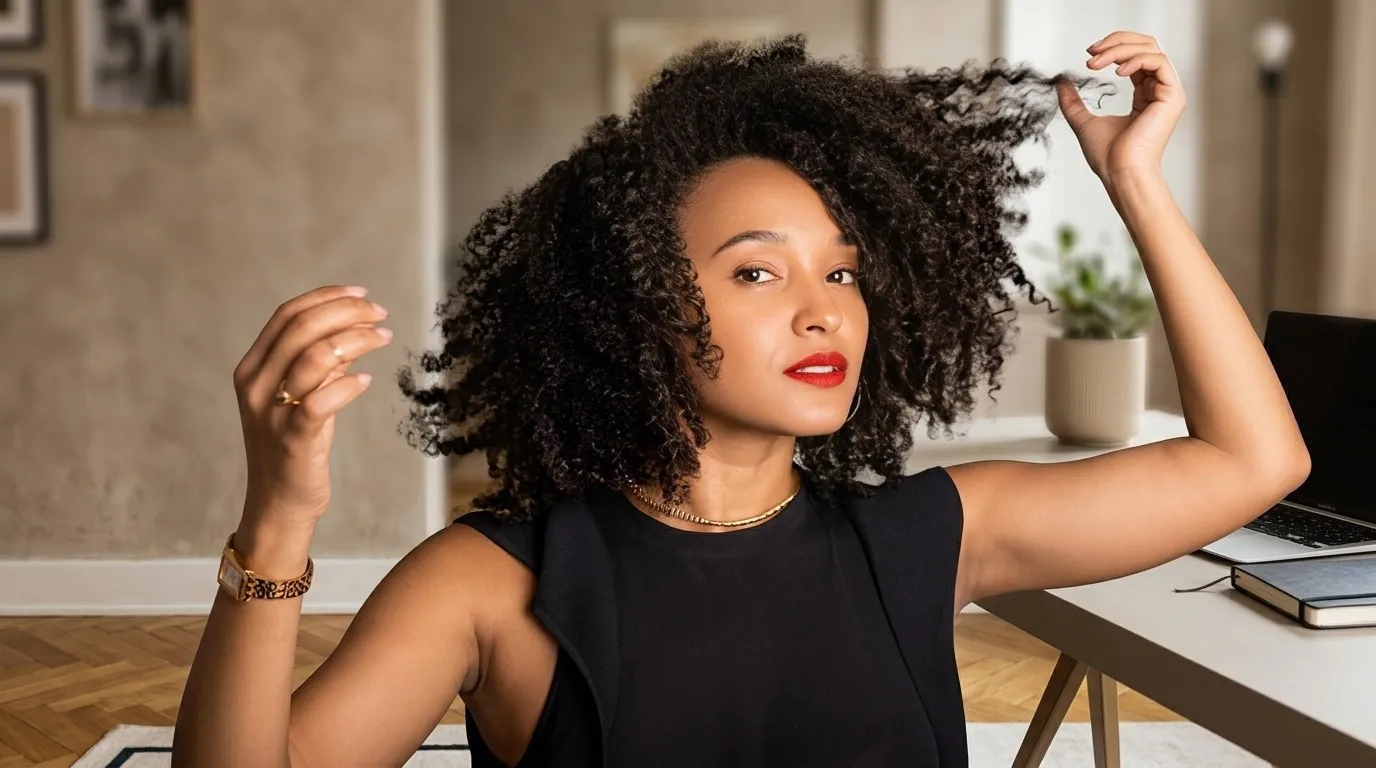
Low-manipulation styling can be a practical way to enjoy your natural hair while reducing how often you comb, straighten, pull, restyle, or apply heat to it. For women with Type 3 and Type 4 textures, extensions can make this approach even more versatile by adding fullness, length, and styling options without requiring the natural hair to do all the work. The key, however, is choosing extensions that cooperate with your own texture instead of creating more work. Curl pattern matters, but so do density, shrinkage, installation method, leave-out, and the hairstyle you ultimately want to wear. When those elements complement your natural hair and everyday routine, achieving a believable finished look should require much less blending and repeated manipulation.
Start With Your Natural Texture, Not Just the Curl You Like
Textured and natural hair can vary tremendously even within the same curl-type category, so choosing Kinky Curly Hair Bundles should begin with observing how your own hair actually behaves. Look at your curl size, definition, shrinkage, volume, and softness when your hair is in its normal state. A beautiful extension texture may catch your eye, but if it behaves very differently from your own strands, maintaining the blend can require more twisting, heat, stretching, or product than you originally intended.
Instead of expecting an exact curl-for-curl match, focus on compatibility. Someone with defined 3B curls may prefer a looser coily pattern, while a woman with tighter 3C or 4A hair might need more compact curls and additional volume. Natural heads also commonly contain more than one texture, so matching the most visible areas—especially around the hairline, crown, and leave-out—can be more useful than choosing solely according to a curl chart.
Match the Extension Format to Your Low-Manipulation Routine
Textured and natural hair wearers do not all define low manipulation in the same way. Some want a sewn-in style that can remain in place for several weeks, while others prefer Kinky Curly Wigs because they can cover most or all of the natural hair and greatly reduce the need for daily blending. The better choice depends on how much access you want to your own hair, how frequently you change hairstyles, and whether you want any leave-out.
For sew-ins, minimizing the amount of exposed natural hair can reduce repeated brushing and curl manipulation. Clip-ins can work well for occasional fullness or length because they can be removed at the end of the day, but they should not be installed so tightly or frequently that the same areas experience constant tension. Wigs may offer greater coverage, while partial installations can provide a more seamless connection with the wearer’s own texture.
Choose Density and Volume That Work With Your Own Hair
Texture gets plenty of attention, but density can make or break a low-manipulation style. If your natural hair is naturally full and the added hair is unusually thin, you may find yourself constantly flattening or stretching your own strands. On the other hand, extremely dense extensions paired with fine or lower-density natural hair can create an obvious difference around the blending area.
Think about the finished silhouette you want. A soft everyday style may need less hair than a dramatic, highly voluminous look. Your stylist can also distribute fullness strategically rather than simply adding the maximum number of wefts. Good density placement creates shape while reducing the pressure to manipulate your natural hair until both textures appear identical.
-
Consider your natural hair’s overall fullness.
-
Account for how much the curl pattern expands after styling.
-
Choose enough hair for coverage without creating unnecessary weight.
-
Discuss layering and weft placement with your stylist before installation.
Think About Curl Behavior After Washing, Styling, and Humidity
A curl pattern should be evaluated by more than how it looks immediately after opening the package. Human hair extensions respond to washing, moisture, styling products, drying methods, and the environment. For low-manipulation styling, you want a texture that remains compatible with your natural hair as both move through a normal beauty routine.
Consider whether your hair becomes tighter after washing, expands in humidity, or loses definition when brushed. If your natural strands tend to become fuller throughout the day, an extension texture with similar movement can make the blend more forgiving. This can reduce the urge to repeatedly wet, twist, brush, straighten, or reshape your leave-out simply because the two textures are behaving differently.
Maintenance matters too. Gentle detangling, conditioning, nighttime protection, and avoiding excessive product buildup can help preserve the extension hair while keeping the overall style manageable. Low manipulation should not mean ignoring your natural hair underneath; your scalp and protected strands still need appropriate cleansing, moisture, and care.
What Works Best for You
The best low-manipulation hairstyle is not necessarily the one that hides the most natural hair or lasts the longest. It is the one that allows you to achieve the look you enjoy without forcing your natural texture to behave like something it is not. Choosing complementary curls, realistic density, and an installation method suited to your routine can make daily styling significantly simpler.
Before purchasing textured extensions, think beyond the finished photograph. Consider what happens on wash day, how much blending you are comfortable doing, where your natural hair will be exposed, and how frequently you want to restyle. The closer your extension choice works with your natural texture and lifestyle, the less effort should be needed to maintain a cohesive look—and that is exactly what makes a low-manipulation style worth wearing.