
Consistent gel manicure results depend on more than product quality. A salon also needs a repeatable preparation and base-coat workflow that every technician can follow. When each appointment is handled differently, small steps may be missed and clients may experience lifting, peeling or uneven wear.
A clear workflow helps technicians work efficiently while protecting the natural nail. It also makes it easier to review problems, train staff and maintain the same service standard across appointments.
Begin With a Short Nail Assessment
Before filing or applying any liquid product, the technician should inspect the natural nails. The assessment should consider nail thickness, flexibility, surface condition and previous product.
Important points to check include:
- Peeling or splitting at the free edge
- Oily or unusually dry nail plates
- Previous lifting around the cuticle
- Cracks, sensitivity or over-filed areas
- The client’s preferred length and shape
This information helps determine how much preparation is necessary. Thin or damaged nails should not receive the same level of filing as strong, healthy nails.
Remove Previous Product Carefully
Old gel should be removed according to the product system. Some coatings are designed to soak off, while others need controlled filing. Product should never be peeled or forced away because this can remove layers from the natural nail.
During a refill, a secure product may sometimes be reduced rather than removed completely. Any lifted area, however, should be taken away before new gel is applied. Covering lifting can trap moisture or debris underneath the coating.
Shape and Refine the Nail
The next step is shaping the free edge and refining the surface. Filing should be light and controlled. The aim is to remove surface shine, not thin the nail plate.
The cuticle area also needs careful attention. Non-living tissue left on the nail can interfere with adhesion. After preparation, dust should be removed from the sidewalls, cuticle area and underside of the free edge.
Once cleaned, the nail should not be touched with bare fingers because skin oils can return to the prepared surface.
Use Nail Fresher Kodi With Purpose
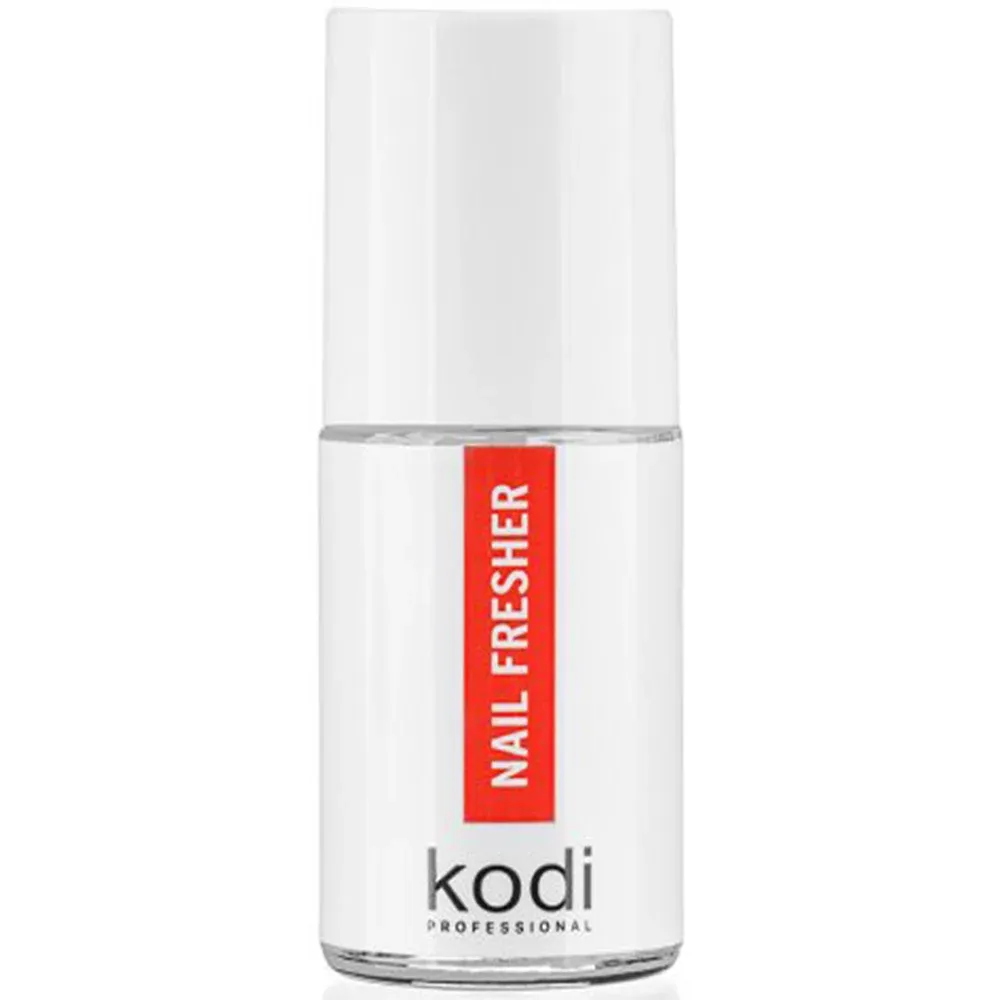
A preparation product such as Nail Fresher Kodi may be used to support cleansing and moisture control before the base layer. It should be applied thinly and allowed to work according to the recommended instructions.
More product does not automatically improve adhesion. Excessive dehydration may be unsuitable for dry, brittle or weakened nails. The technician should adapt this step to the client rather than applying the same amount to everyone.
Clients with naturally oily nails or repeated lifting may require more careful moisture control, while dry nails may need a gentler approach.
Apply Kodi Base in Controlled Layers
The Kodi Base layer creates the foundation for the colour and top coat. A thin contact layer should be applied first, keeping the product away from the skin and sidewalls.
If the natural nail needs light levelling or reinforcement, a small additional amount can be placed through the centre or stress area. The product should be guided smoothly rather than brushed repeatedly.
Before curing, the technician should check:
- Whether the cuticle margin is clean
- Whether the sidewalls are free from flooding
- Whether the surface is level
- Whether the free edge is lightly sealed
- Whether the layer can cure evenly
These checks reduce the need for correction after curing.
Standardise Curing and Hand Position
A repeatable workflow should include clear curing times and lamp positioning. Clients should place their hands flat inside the lamp, with fingers straight and slightly separated.
Thumbs may need to be cured separately if the lamp does not expose them evenly. Removing the hand early or placing it at an angle can leave parts of the base under-cured.
Technicians should use the lamp and curing time recommended for the product system. Wattage alone does not guarantee compatibility.
Record What Was Used
Service notes make the workflow more useful over time. Technicians can record the preparation method, base product, curing time and any lifting found at the next appointment.
These records help identify patterns. If one client repeatedly lifts at the free edge, the technician can adjust sealing or length. If lifting appears near the cuticle, preparation or product placement may need review.
Conclusion
A repeatable nail preparation and base-coat workflow improves consistency, efficiency and client confidence. Gentle assessment, accurate cleaning, controlled product use and standardised curing help reduce avoidable lifting and uneven wear.
Professionals can explore preparation products, base gels and other manicure essentials at kodiprofessional.com. Reliable results come from combining suitable products with a clear process that can be followed, reviewed and improved at every appointment.